Most homeowners know they want their staircase to look different. Fewer know what a stair renovation GTA actually involves — how long it takes, who does what, what choices they will need to make. This is the guide we wish every client had read before we arrived.
The four types of stair renovation GTA homeowners ask about
These four terms describe different scopes of work. Understanding the difference helps you describe what you need — though we also assess and recommend the right scope during the free in-home inspection.
Stair Repair
Fixing specific structural or functional issues — squeaky treads, loose railings, damaged risers, unstable spindles. The staircase stays in place and is not refinished unless requested separately. This is the right scope when the staircase looks fine but sounds or feels wrong.
Sanding the existing hardwood surface, applying new stain, and adding fresh finish coats. The wood stays in place but gets a completely new appearance. This works when the treads are structurally sound but the surface is worn, stained, or the colour is outdated.
Installing new hardwood tread caps over the existing treads, along with new risers. The substrate stays but the surface is entirely new. This is the right approach when the existing treads are stable but you want a fresh hardwood finish — most commonly after carpet removal in Mississauga and Vaughan homes .
Removing all existing treads and risers and installing new material. This is the right scope when the existing treads are damaged, when the staircase layout is being changed, or when the existing material is too worn or thin to work with.
These scopes are not mutually exclusive. A project might combine repair work on the railing with capping on the treads and new spindles throughout — we assess each component and recommend only what is actually needed.
The benefits of stair renovation GTA homeowners notice most
A staircase renovation does more than update the look of one part of your home. In most GTA homes, the staircase is one of the first things visitors see — and one of the most-used surfaces in the house.
- Improved safety — repaired railings, stabilised spindles, and properly secured treads eliminate the most common household trip hazards
- Stronger first impression — the staircase is visible from the entry in most GTA homes; a clean, updated staircase changes the feel of the entire main floor
- Visual cohesion — if you have replaced your floors in recent years, matching the staircase creates a unified look throughout the home
- Increased home value — real estate agents consistently identify staircases as a high-visibility element that buyers notice; a dated staircase can undercut an otherwise well-presented home
- Noise elimination — a squeaking staircase disrupts sleep and daily life; repair permanently eliminates the sound at its structural source
What happens at the free inspection
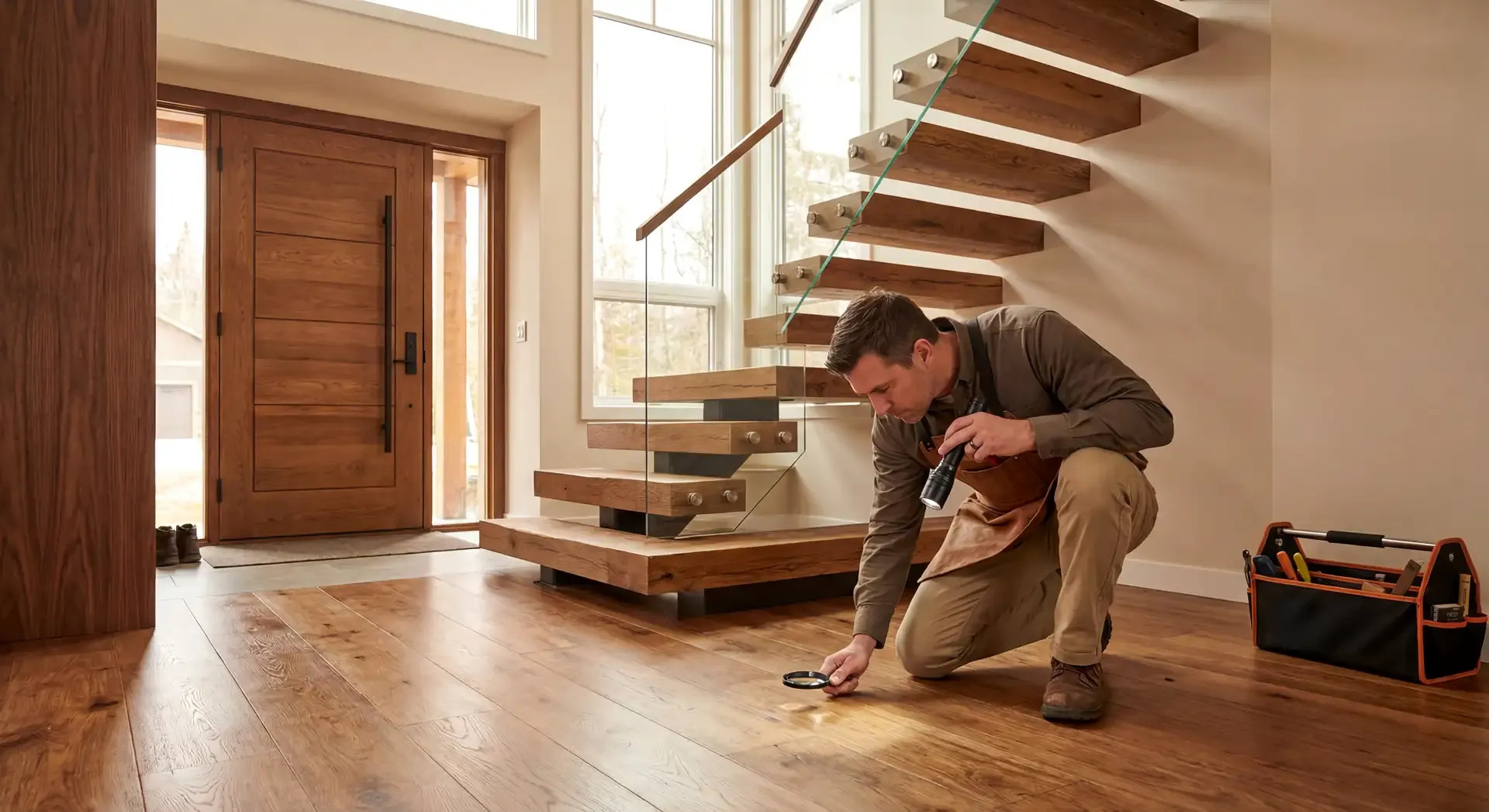
The inspection is the most important part of the stair renovation GTA process. Everything that follows — the scope, the material choices, the timeline — comes from what we find.
When we arrive, we walk the entire staircase. We test every tread for squeaking and movement. We check the risers for damage or rot. We assess the railing and spindles for stability and condition. We look at the stringer condition where accessible. We note the wood species, existing finish, and floor type.
We also look at your existing floors. In many cases we bring sample boards and test stain colours on the spot so you can see how they will look in your actual space, under your actual lighting.
By the end of the inspection — typically 30 to 45 minutes — we know exactly what needs to happen. We give you a written quote before we leave. You are under no obligation to proceed.
Material choices for your stair renovation GTA project
The inspection is also when material decisions happen. Here is what you will typically need to decide.
Wood species
For capping or full replacement, you choose the hardwood species. Red oak and white oak are the most common in the GTA. The right choice depends primarily on your existing floors — the species should match for a cohesive result.
Stain colour
We offer a full range from natural and light sand through medium browns to dark walnut, ebony, and wire-brushed grey. We test samples on actual wood pieces in your home before committing. The colour looks different in a showroom than it does in your space under your lighting — testing on-site eliminates surprises.
Railing and spindle style
The most common combinations in the GTA right now: square iron spindles with a wood top rail in a matching stain; classic round wood spindles in white or a coordinating stain; glass panels with a minimal metal or wood rail. The railing style has a significant effect on how the staircase reads overall.
Riser colour
Risers are typically either stained to match the treads or painted white. Painted white risers with stained treads is currently the dominant preference across the GTA — the contrast reads as intentional and contemporary.
Finish type and sheen
We use waterborne polyurethane as our standard finish — durable, quick-drying, minimal odour, available in matte, satin, and semi-gloss. Matte and satin are the most popular choices in 2025. Oil-based finishes are available for homeowners who prefer a warmer, amber tone.
What the stair renovation GTA installation involves
Once materials are selected and the quote is approved, we schedule the work. Here is what happens on-site.
Preparation and protection
We protect surrounding floors, walls, and adjacent surfaces with drop cloths and plastic sheeting. We use dustless sanding equipment that captures the vast majority of dust at the source — a significant upgrade from traditional sanders.
Sanding (refinishing projects)
We sand in multiple passes from coarser to finer grits until the old finish is removed and the bare wood is smooth and even. For treads that have been sanded multiple times before, we check thickness carefully — over-sanded treads may require capping rather than refinishing.
Staining
We apply stain by hand, one tread at a time, working it into the grain and wiping to the desired coverage. Stain is tested on sample pieces first. On staircase projects this careful, tread-by-tread approach produces a consistent result.
Finish coats
We apply a minimum of three finish coats on staircases, with light sanding between each for adhesion. Each coat requires drying time — typically 6 to 8 hours for waterborne finishes. We tell you which areas will be inaccessible and for how long before we start.
Spindle and railing installation
New spindles are installed after the treads are finished. Spacing is governed by Ontario Building Code — the gap between spindles must not exceed 100mm. The railing cap is installed last, fitted and finished to match or complement the treads.
Final walkthrough
We walk through the completed staircase with you. You inspect every tread, every spindle, every riser. You approve the result before we collect payment. We do not consider a job finished until you are satisfied.
Timeline — what to expect
- Stair repair only — typically completed in a single day
- Stair refinishing (sanding, staining, 3 finish coats) — 2 to 4 days
- Stair capping with new risers and spindles — 2 to 3 days
- Full tread replacement with refinishing — 3 to 5 days
- Full staircase renovation including railing, spindles, capping, and landing — 4 to 7 days
We confirm the exact timeline during the inspection, based on the specific scope, number of treads, and products selected. We do not start without giving you a clear day-by-day picture of what to expect.
Preparing your home for a stair renovation GTA visit
- Clear the staircase of any runners, carpet clips, or loose items before we arrive
- Plan an alternative route between floors if possible during the finish curing period
- Keep pets away from the work area during and immediately after the job
- If the project involves sanding, cover or move anything near the staircase that you would not want a light layer of fine dust on
How to maintain your stair renovation GTA result
A refinished hardwood staircase will look its best for years with straightforward care. The finish — not the wood — is what takes the wear, and it is designed to be maintained.
Daily — vacuum or dry-mop
Remove grit and debris regularly. Small particles act like sandpaper underfoot and accelerate finish wear. Avoid wet mopping; wipe spills immediately with a barely damp cloth and dry right away.
Pets — keep nails trimmed
Dog nails, particularly on larger breeds, create fine scratches in the finish over time. A stair runner on high-traffic sections extends finish life significantly in pet households.
Avoid harsh cleaners
Steam mops, ammonia-based cleaners, and oil soaps all damage waterborne polyurethane finish. Use a pH-neutral hardwood floor cleaner diluted in water for any deeper cleaning.
Every 5–8 years — refresh coat
A light screening and fresh finish coat restores the protective layer without sanding back to bare wood. Far less disruptive than a full refinish and extends the life of your staircase significantly. A&C Brothers offers this as an ongoing maintenance service.
Can I renovate my stairs myself?
Some stair work is within reach of a capable DIYer — and some is not. Here is an honest breakdown.
✓ Reasonable DIY
Minor maintenance tasks
Tightening a loose spindle, repainting risers, or applying a maintenance top coat over an existing finish in good condition. Limited downside if done imperfectly.
⚠ Not recommended
Sanding and staining
The most common mistake is uneven sanding — sanding through the front edge or leaving high spots that show through stain. Professional dustless equipment also prevents dust settling throughout the home for days.
✗ Definitely not DIY
Stair capping, tread replacement, and structural repair
Capping and replacement require precise measurement and machining to avoid height variation between steps — a safety requirement under Ontario Building Code. Structural repair on stringers or tread-riser joints can make problems worse if done incorrectly.
If you are unsure whether a task is within your skill level, the free inspection is a good starting point. We assess the staircase honestly and will tell you directly if what you need is something you could handle yourself.
Our workmanship commitment
Every stair renovation GTA project we complete is backed by our workmanship commitment. If anything we installed or finished fails due to workmanship — a tread comes loose, finish peels, a spindle works free — we return and fix it at no charge.
We do not cover normal wear, damage from pets or sharp objects, or changes in the wood caused by seasonal humidity variation, which is a natural property of hardwood. We will always be honest about the distinction and advise you before the project if any condition is likely to affect longevity.